A Trusted Local Team for High-Quality Production Support About Us
From early concept development to hands-on production in the field, our Cambodia-based production team supports video projects of every size and genre. As a company specializing in international filming and production coordination, our approach places a strong emphasis on preparation and risk management, bringing together all key elements (filming permits, experienced crew, professional equipment, location coordination, and safety planning) to create a smooth and dependable production environment.
Over the years, we have worked with leading global media outlets and brands such as the BBC, Netflix, The New York Times, Discovery, Nike, Google, NHK, TBS, TV Tokyo, Fuji TV, Mainichi Shimbun, and Panasonic. Our cumulative experience spans documentaries, news coverage, travel programs, feature films, corporate productions, and branded content. Through our deep local knowledge, we help productions portray Cambodia’s culture, history, and landscapes with authenticity and visual clarity. We make sure to stay closely aligned with each client’s creative and editorial goals, taking full responsibility for preparation and on-site execution to make strong storytelling possible.
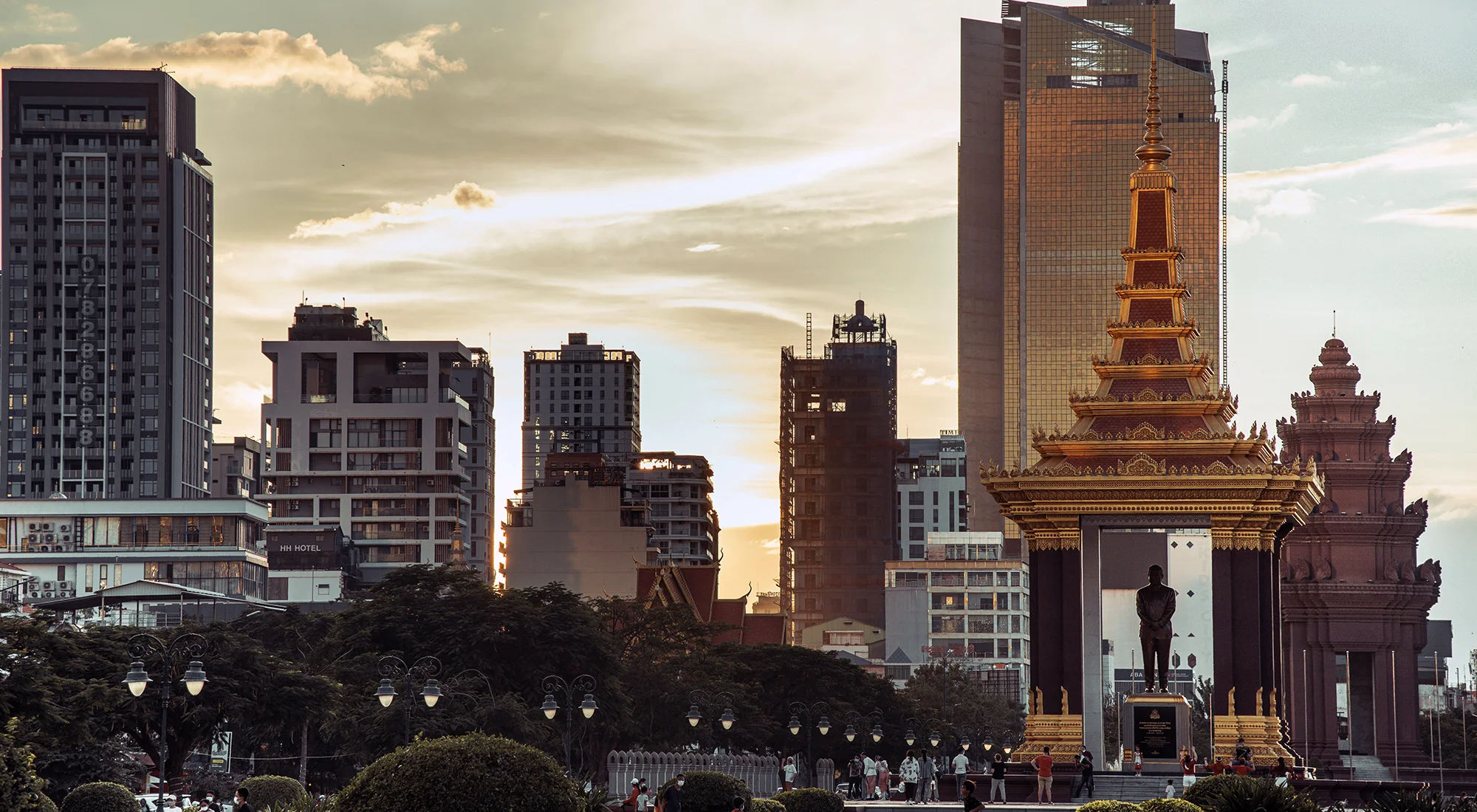
End-to-End Video Production Support in CambodiaOur Services
Production Coordination & Crew Placement

Permit Management

Equipment Rental & Technical Support

Research & Fact-Checking

Location Management & On-Site Operations

Logistics: Transport, Accommodation & Interpretation

Bringing Global Stories to Cambodia Film Production in Cambodia
Cambodia offers filmmakers a visual range that is hard to find elsewhere. Ancient temples stand alongside everyday city life, rivers shape entire communities, and rural landscapes are never far from urban centers. When productions take advantage of this mix—and approach it with local understanding—the result is work that feels grounded, distinctive, and visually rich. Filming in Cambodia comes with a few realities worth keeping in mind:
Local coordination matters: Cambodian production coordinators are essential partners on any shoot. They understand how permits actually work, how locations operate day to day, and how to solve problems quickly when plans change on the ground.
Respect for culture and religion: Temples, ceremonies, and community life are part of daily reality, not backdrops. Filming schedules often need to adjust around religious events, national holidays, or local customs, and a respectful approach goes a long way in gaining cooperation.
Close, varied locations: In a single trip, it’s possible to move from world-famous ruins to floating villages, farmland, or busy streets. Well-known sites like Angkor or Tonlé Sap are visually powerful but require careful timing and crowd awareness to film effectively.
Weather and environment: Heat, humidity, and seasonal rain influence everything from travel time to lighting conditions. Planning with the climate in mind helps avoid delays and protects both crew and equipment.

Navigating Filming in Cambodia
Filming in Cambodia comes with a unique mix of opportunities and constraints. Urban areas move quickly, archaeological and religious sites operate under strict rules, and natural locations bring their own logistical challenges. Because these factors overlap, local coordination by teams experienced in international production is essential. Even within a single country, expectations and sensitivities vary widely between places like Phnom Penh, Siem Reap, Tonlé Sap Lake, the Angkor temple complex, and rural regions.
When a project touches on subjects such as history, labor, tourism, the environment, or religion, building trust with locations becomes just as important as securing permits. In many cases, official approval alone does not guarantee access. By sharing local insight from the earliest planning stages and bringing preparation, negotiation, safety planning, and on-site control into one process, we create a working environment where international crews can film with confidence.
Pre-production Planning
In Cambodia, archaeological zones, temples, and administratively controlled areas each follow their own rules, making it critical to clarify filming intent early on. Pre-production planning involves defining the subject, creative approach, equipment needs, crew size, and travel routes, while identifying risks specific to each location. For instance, the Angkor temple complex is governed by particularly strict conservation standards, with detailed limitations on tripods, cable placement, night filming, and aerial shots. Meanwhile, shoots in coastal areas, lakes, or mountainous regions require additional planning around trekking, boat access, and protected zones. Permits and risk management are handled in parallel, allowing potential delays to be addressed before they affect the schedule.
On-the-Day Shoot Management
Conditions on a filming day can change quickly: traffic congestion and crowded commercial areas may disrupt plans in cities, while heritage sites can suddenly restrict access due to ceremonies or tourist surges. On-site management focuses on keeping the shoot moving by monitoring progress, managing crew flow, handling equipment logistics, supporting contributors, and switching to backup plans when needed. Shot order may be adjusted on the fly, while crowd control, sound conditions, and communication with local stakeholders are handled in the background. By responding continuously to real conditions on the ground, we allow directors and camera teams to stay focused on storytelling and visuals, making the most of limited shooting time.
Permits & Administrative Coordination
Cambodia’s permitting systems differ sharply depending on the location: archaeological and cultural heritage sites fall under the Ministry of Culture and the APSARA Authority, requiring detailed submissions covering content, usage, equipment, and drone operations.
Urban streets, markets, and commercial spaces often require approval from both municipal authorities and site managers, with additional conditions sometimes applied to documentary work. While official permissions are processed through paperwork, filming often depends on separate, on-the-ground agreements with community leaders or private managers. Understanding this distinction—and addressing both sides—is key to successful production. Permits are treated not as a formality, but as evidence of respect for local systems.
Location Management
Securing a location does not guarantee stable conditions. Tourist sites can become congested without notice, while natural settings are shaped by weather, humidity, and terrain. Location management is about protecting continuity during the shoot. This includes selecting time windows that avoid peak crowds, preparing alternative locations, managing movement in non-exclusive spaces, and briefing nearby residents in advance. When religious events or government activities arise, the location plan is quickly reworked. Shoots tend to run more smoothly when cultural awareness and local relationships are built into these decisions.
Community Relations
In many parts of Cambodia, filming depends as much on local understanding as it does on official approval. Temples, farming villages, fishing communities, and craft districts all require trust and cooperation from residents. Community relations involve clearly explaining the purpose of the shoot, minimizing disruption, and addressing safety concerns. Productions working within local values and avoiding cultural misunderstandings are ultimately more likely to receive genuine cooperation. These relationships not only help prevent refusals but also often lead to deeper access and more authentic portrayals of each location.
Technical Adaptation to the Filming Environment
Cambodia’s high heat and humidity, sudden rainstorms, limited light in forested areas, and power restrictions at heritage sites all require practical technical planning. This is why we prepare generators and spare batteries, protect equipment from moisture, plan for ventilation and hygiene, and structure crews to handle frequent stair climbs or vertical movement. Outside major cities, where communication gaps or limited medical access may be a concern, satellite communication and emergency measures are arranged in advance. By adapting operations to local conditions, we help protect both the quality of the footage and the safety of everyone on set.
Global Reach with a Personal Touch Our Network
Our extensive global network spans more than 100 countries, connecting us with local professionals fluent in Japanese and highly experienced in international production. In cases where a Japanese-speaking team member isn’t available, we provide skilled English-speaking producers backed by Japanese coordinators. This dual-language approach guarantees seamless communication, efficient problem-solving, and culturally sensitive support, regardless of the location or project complexity.
Contact Us
Cambodia Satsuei | Global Production Center Ltd.
cambodia-satsuei.com is owned and operated by Global Production Center Ltd, a UK-registered company.
(Company Number: 11528256)
Established: 2018
Specialty: Media production across 150+ countries
Staff: Over 30 full-time employees and a network of 1,500+ international contractors fluent in Japanese and English, experienced in media production.
Achievements: Delivered over 300 production projects in the past year, including 60+ for major Japanese clients.
Other franchises owned by the company:
- Storytailors (Global production network for Western clients)
- Nippon Production (Global production network for Japanese clients)